Few football shirts in Kenya carry the history, emotion and identity associated with the Gor Mahia jersey.
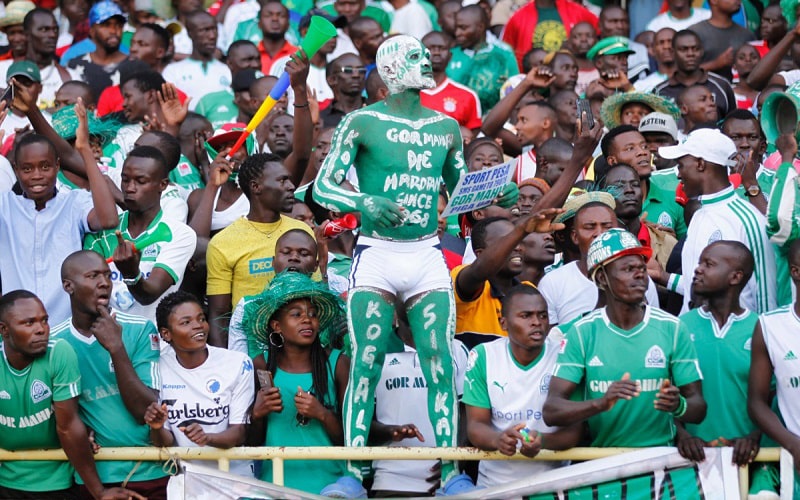
For generations of supporters, the green-and-white colours have represented more than a football club they have become a symbol of K’Ogalo’s identity.
Since the formation of Gor Mahia in 1968, the club’s shirts have gone through changes in design, manufacturers, sponsors and technology, but one thing has remained remarkably consistent: the unmistakable green identity of Gor Mahia.
1968: Where it all began
Gor Mahia was formally established on 17 February 1968 following the merger of Luo Union FC and Luo Sports Club.
From its earliest days, green and white became synonymous with Gor Mahia.
The club’s official history identifies green and white as its traditional colours and describes the home kit as a green shirt with white trim.
The early jerseys were considerably simpler than today’s football shirts. There were no elaborate graphics or large commercial logos. The shirt primarily served as an expression of the new club’s identity on the field.
The 1970s became one of the defining periods
The club established itself as a powerhouse in Kenyan football, with the green jersey becoming increasingly associated with success.
Gor Mahia’s unbeaten league campaign in 1976 further strengthened that association.
During this era, football shirts were generally much less commercially designed than modern kits. The emphasis was on the club colours, badge and practicality rather than sponsorship branding and elaborate patterns.
For Gor supporters, however, the simple green shirt was already becoming an unmistakable symbol of K’Ogalo.
The 1980s produced arguably the most important continental chapter
In 1987, Gor Mahia won the African Cup Winners’ Cup, becoming the first Kenyan club to win a major CAF club competition. The green shirt therefore became associated not only with domestic success but also with Gor Mahia’s historic continental achievement.
The era also demonstrated how the football shirt was becoming increasingly important as part of a club’s visual identity.
The traditional green remained central even as football kits around the world became more sophisticated in their design.
The 1990s brought another important development: commercial sponsorship became increasingly visible on football shirts.
One documented example is Gor Mahia’s 1991 shirt, which carried the International Casino name.
This period marked a gradual transition from the largely traditional football shirt towards the modern commercially branded jersey.
The green base remained familiar, but sponsor logos increasingly became part of the shirt’s appearance.
2000s: From difficult years to a new commercial era
As Kenyan football became more commercialised, however, Gor’s jersey increasingly became an important source of identity and revenue.
The club’s revival towards the end of the decade coincided with a renewed relationship between the team, supporters and its commercial partners.
A major turning point came in 2011, when Gor Mahia secured what has been described as its first legitimate major shirt sponsorship, with Tuzo.
The reported deal with Spin Knit Dairy was worth KSh38 million.
The sponsorship era continued to develop
In 2013, Gor Mahia’s sponsorship arrangement with Brookside Dairies came to an end, after which the club went through a period of searching for new commercial partners.
By this point, the Gor Mahia shirt had evolved from being primarily a representation of club colours into a combination of identity, sporting technology and commercial branding.
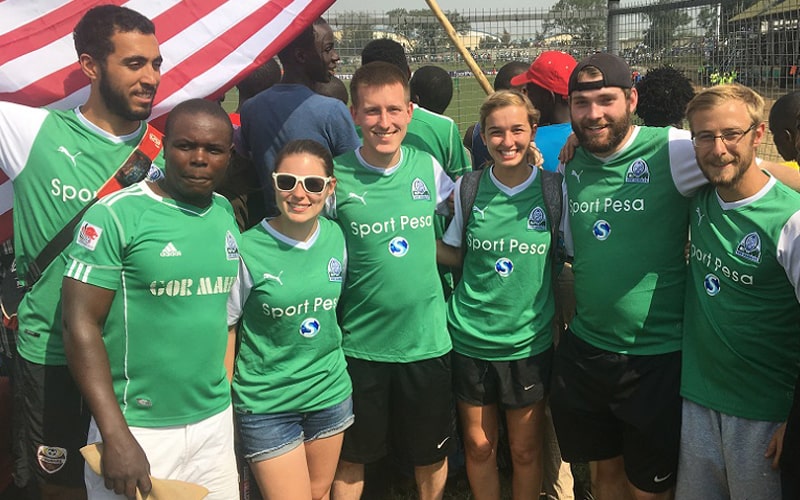
Another major chapter came in 2016 when Gor Mahia signed a shirt sponsorship deal with SportPesa, alongside a separate partnership with Crown Beverages.
The SportPesa logo appeared prominently on the front of the shirt, while Crown Lager branding appeared on the sleeves.
This was significant because the sponsor’s logo became almost as recognisable to supporters as the traditional green colour itself.
In January 2020, Gor Mahia announced Umbro as new kit partner
The partnership covered competition kits, training wear and off-field apparel, while the club also made the new products available for supporters to purchase.
The arrival of Umbro represented another step in the professionalisation of the Gor Mahia jersey.
Modern materials, specialised football cuts and more sophisticated designs became increasingly visible.
Yet the basic formula remained intact: green for the home identity, with white and other colours used in supporting designs.
2024/25: The jersey becomes a storytelling canvas
Gor Mahia’s 2024/25 kits showed just how far the shirt had evolved.
The home jersey retained the traditional green but incorporated an aerial map of Kisumu County into the design.
The away kit used black, white and green, with wave patterns referencing Lake Victoria, while the third kit adopted black and featured a distinctive “GM” monogram.
This represented a shift from simply designing a football shirt to using the jersey to tell a story about history, culture and identity.
The shirt was no longer just something players wore for 90 minutes. It had become a piece of cultural and commercial merchandise for supporters.
The latest Gor Mahia home jersey continues the same philosophy
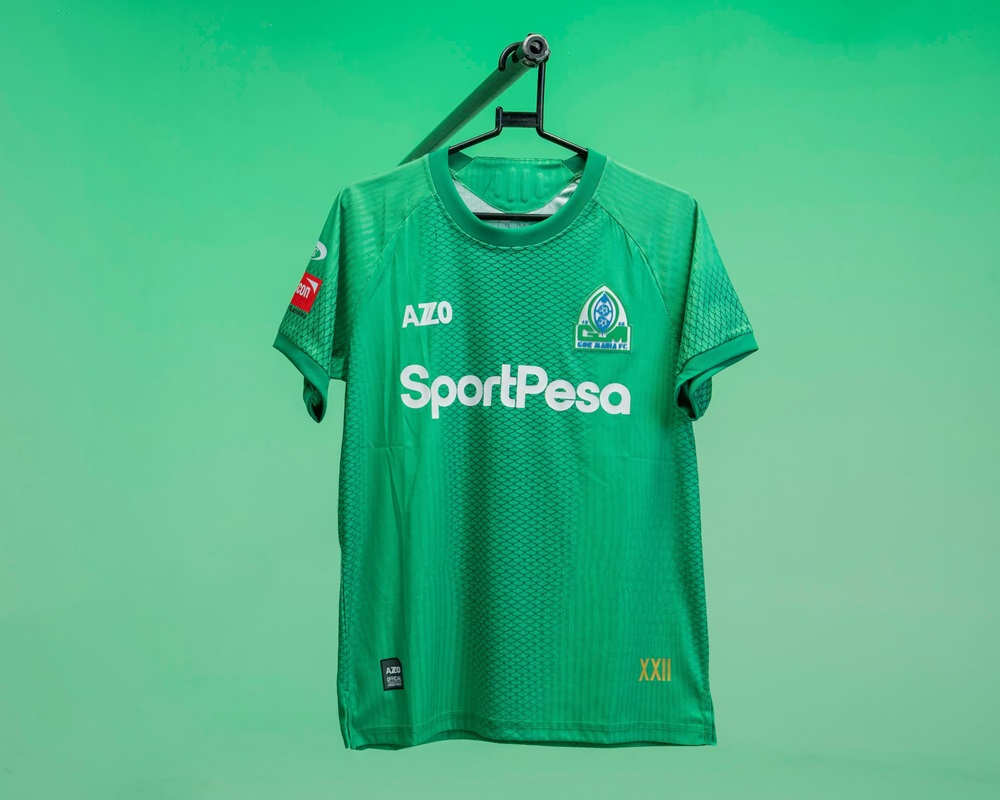
The 2026/27 shirt retains the club’s familiar green colour, but introduces a more pronounced technical texture and patterned detailing across the fabric.
The Gor Mahia crest remains on the chest, with AZO branding and SportPesa also incorporated into the modern design.
It is perhaps the clearest illustration of the evolution of the K’Ogalo shirt: the technology and design have changed dramatically, but the fundamental identity has not.
More than a jersey
Looking back from 1968 to 2026, the story of the Gor Mahia jersey is essentially a story of continuity and change.
The designs have changed, the kit manufacturers have changed, sponsors have changed, the materials and technology have changed, the commercial value of the shirt has changed but the green identity has survived every era.
From the relatively simple shirts of the club’s formative years to today’s technologically designed jerseys carrying commercial partners and cultural symbols, the Gor Mahia shirt has remained one of the strongest visual representations of K’Ogalo.
For supporters, therefore, wearing green is not simply about supporting a football team.
It connects the present generation with the players and supporters who wore the same colours through the triumphs of the 1970s, the continental glory of 1987, difficult periods in the 1990s and 2000s, and the club’s modern resurgence.
The jersey has changed with the times but the green remains. And that may be the most enduring part of Gor Mahia’s 58-year football story.